
 |
Author: Pedro Cardim, José Javier Ruiz Ibáñez et al.
ISBN: 9781845195441
Format: HB
Extent: 320 pp.
Price: £65
Publication: August 2012
Publisher: Sussex Academic Press
|
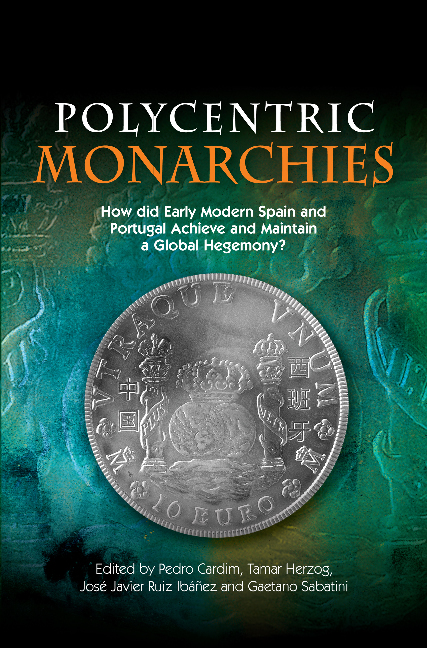
Having succeeded in establishing themselves in Europe, Asia, Africa and the Americas, in the early 16th century Spain and Portugal became the first imperial powers on a worldwide scale. Between 1580 and 1640, when these two entities were united, they achieved an almost global hegemony, constituting the largest political force in Europe and abroad. Although they lost their political primacy in the seventeenth century, both monarchies survived and were able to enjoy a relative success until the early 19th century. The aim of this collection is to answer the question how and why their cultural and political legacies persist to date. The Editors and Contributors discard the portrayal of the Iberian monarchies as the accumulation of many bilateral relations arranged in a radial pattern, arguing that these political entities were polycentric, that is to say, they allowed for the existence of many different centres which interacted and thus participated in the making of empire. The resulting political structure was complex and unstable, albeit with a general adhesion to a discourse of loyalty to King and religion.
|
Author: Pedro Cardim, José Javier Ruiz Ibáñez et al.
ISBN: 9781845195441
Format: HB
Extent: 320 pp.
Price: £65
Publication: August 2012
Publisher: Sussex Academic Press
|
Having succeeded in establishing themselves in Europe, Asia, Africa and the Americas, in the early 16th century Spain and Portugal became the first imperial powers on a worldwide scale. Between 1580 and 1640, when these two entities were united, they achieved an almost global hegemony, constituting the largest political force in Europe and abroad. Although they lost their political primacy in the seventeenth century, both monarchies survived and were able to enjoy a relative success until the early 19th century. The aim of this collection is to answer the question how and why their cultural and political legacies persist to date. The Editors and Contributors discard the portrayal of the Iberian monarchies as the accumulation of many bilateral relations arranged in a radial pattern, arguing that these political entities were polycentric, that is to say, they allowed for the existence of many different centres which interacted and thus participated in the making of empire. The resulting political structure was complex and unstable, albeit with a general adhesion to a discourse of loyalty to King and religion.
|
Author: Pedro Cardim, José Javier Ruiz Ibáñez et al.
ISBN: 9781845195441
Format: HB
Extent: 320 pp.
Price: £65
Publication: August 2012
Publisher: Sussex Academic Press
|
Having succeeded in establishing themselves in Europe, Asia, Africa and the Americas, in the early 16th century Spain and Portugal became the first imperial powers on a worldwide scale. Between 1580 and 1640, when these two entities were united, they achieved an almost global hegemony, constituting the largest political force in Europe and abroad. Although they lost their political primacy in the seventeenth century, both monarchies survived and were able to enjoy a relative success until the early 19th century. The aim of this collection is to answer the question how and why their cultural and political legacies persist to date. The Editors and Contributors discard the portrayal of the Iberian monarchies as the accumulation of many bilateral relations arranged in a radial pattern, arguing that these political entities were polycentric, that is to say, they allowed for the existence of many different centres which interacted and thus participated in the making of empire. The resulting political structure was complex and unstable, albeit with a general adhesion to a discourse of loyalty to King and religion.


